
Service
Dental cleaning for dogs and cats: much more than removing tartar
What do we do from the moment you leave your dog or cat with us until they go home?
When you look at the before and after of a dental cleaning, the change seems obvious: the tartar is gone and the teeth look clean again.
But that is only what you can see.
Behind a veterinary dental cleaning there is a prior assessment, a pre-anaesthetic blood test, patient preparation, anaesthesia and monitoring, cleaning and examination of the mouth, polishing and a supervised recovery before going home.
A dental cleaning is not simply “removing tartar”. It is a complete veterinary procedure.
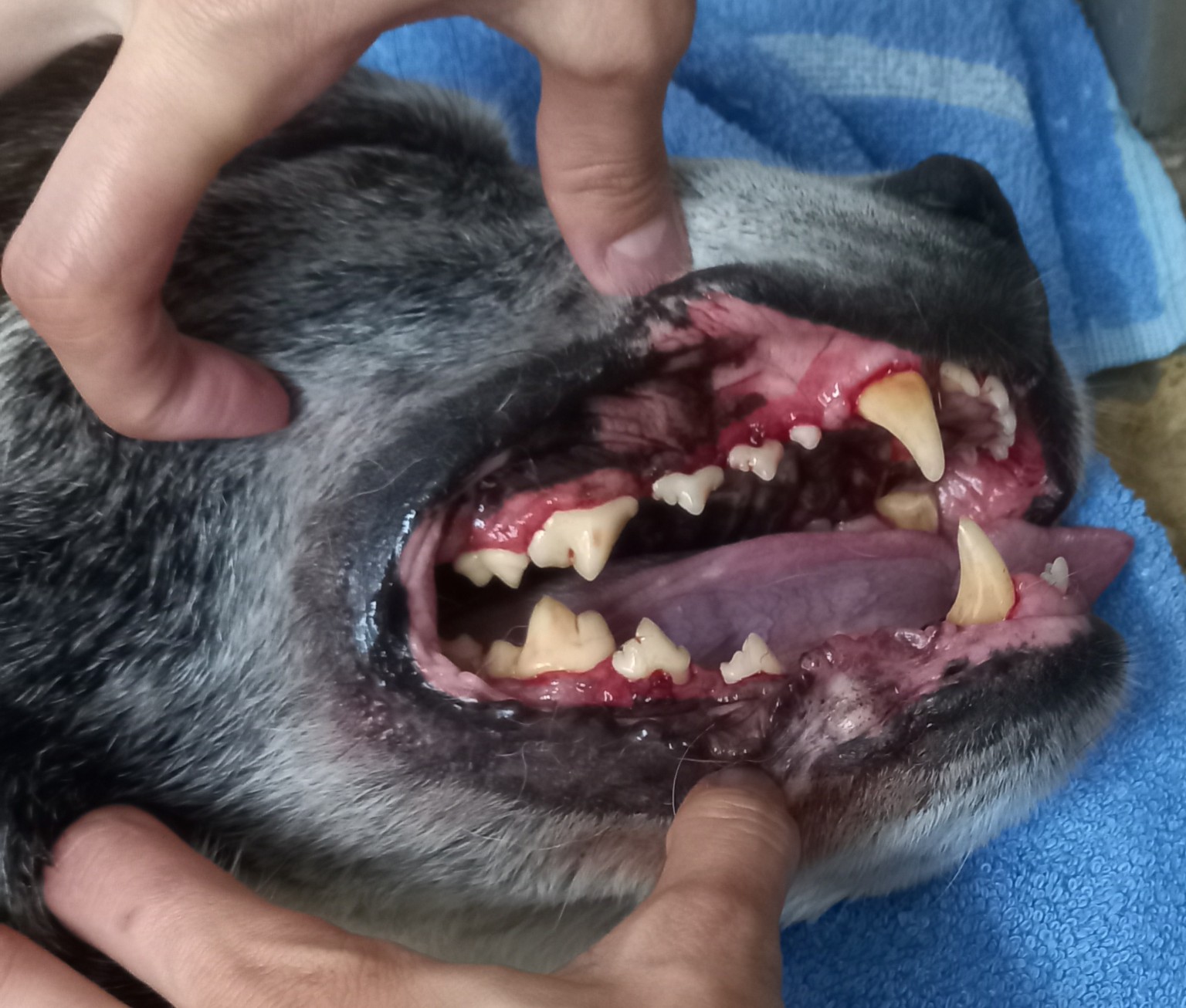
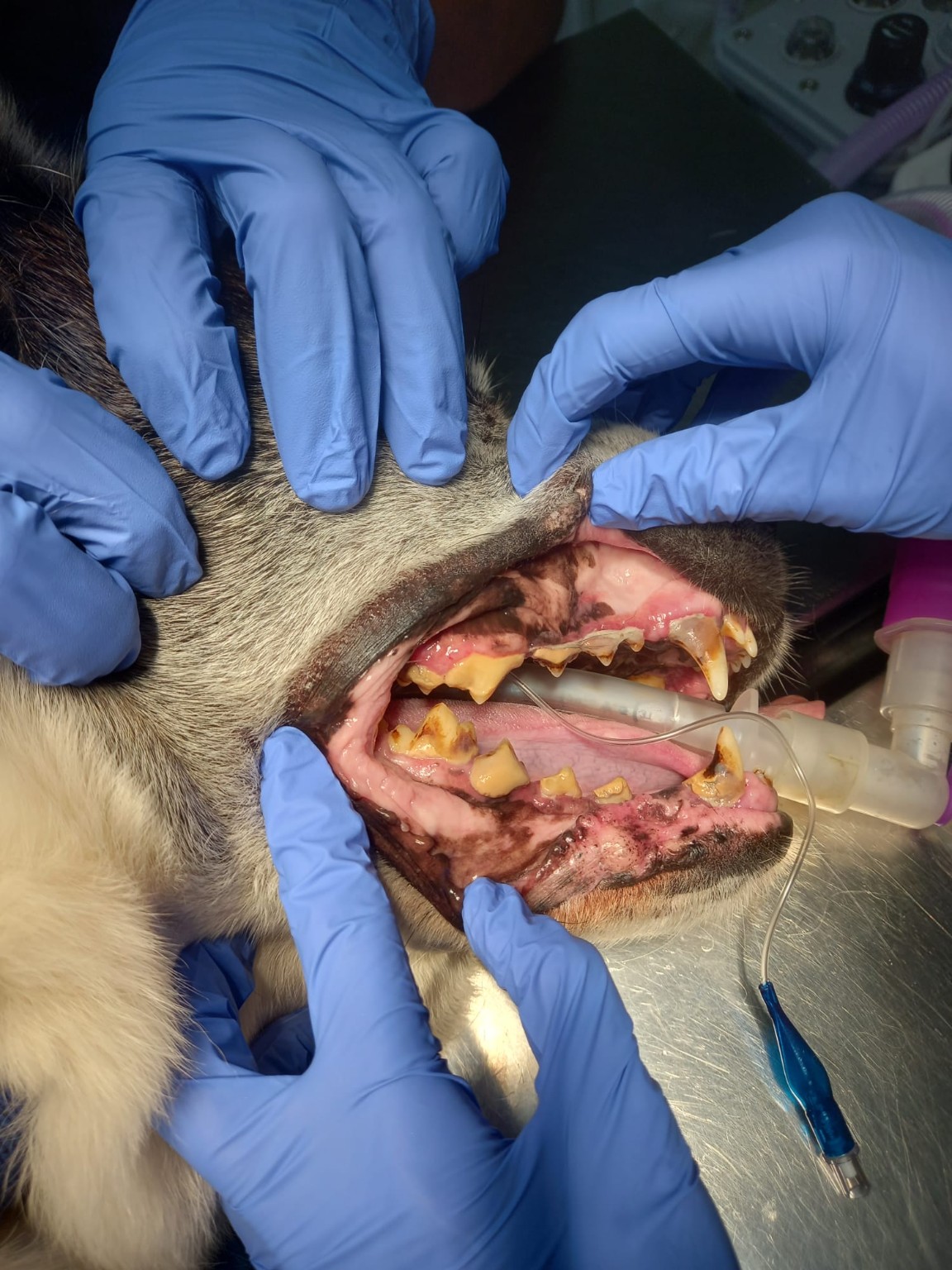
From the moment they walk in until they go home
When you leave your dog or cat with us, a process begins that lasts several hours, and every stage matters.
- 01
First, we want them to feel calm
We go over their details with you, answer any questions and ask you to sign the anaesthetic consent form.
If your dog is calm, they can stay with us at reception until it is time for sedation. We see no need to isolate them if they can wait relaxed and in company.
Cats are taken to our hospitalisation area, where the environment is quieter. When their temperament and safety allow it, they can even explore the space before the procedure so that the wait is as stress-free as possible.
- 02
Pre-anaesthetic blood test: always, and before going any further
The pre-anaesthetic blood test is always carried out and is included in the price of the dental cleaning.
The vet sedates the patient and, once the animal is calm, we take the sample for the blood test.
We check the results before continuing. The aim is to have information about their condition before anaesthesia so we can assess the procedure more safely.
- 03
Preparing for the cleaning
If the results and the vet's assessment allow us to continue, the patient goes into theatre. An intravenous line is placed, the patient is intubated and the right anaesthetic protocol for that animal is established.
The anaesthetic protocol is tailored to each patient. Depending on the animal and the vet's assessment, inhaled anaesthesia, intravenous anaesthesia or a combination of both may be used.
During the procedure the patient also receives intravenous fluid therapy.
- 04
During anaesthesia, we monitor
While we carry out the cleaning, we don't simply leave the animal “asleep”.
Throughout the procedure we monitor:
- heart rate and pulse;
- heart rhythm by ECG;
- blood pressure;
- blood oxygen saturation;
- body temperature.
The vet and the theatre team supervise the anaesthesia and adapt the protocol to each patient's response.
- 05
We don't just clean what you can see
During the cleaning we remove plaque and tartar and carefully examine the teeth and gums.
After cleaning we polish the teeth, an important part of the procedure that leaves the tooth surface as smooth as possible once the tartar has been removed.
- 06
What if we find a tooth that needs to come out?
During the cleaning we may find teeth with severe periodontal disease, mobility or other lesions that make extraction necessary.
We don't extract teeth for the sake of it. Whenever it is reasonable to keep a tooth, we keep it.
When a tooth is clearly compromised and keeping it would mean keeping a source of pain or infection, it may need to be extracted.
Necessary simple extractions are included in the procedure. Extractions that, due to their complexity, require a different approach will be assessed individually.
- 07
The cleaning ends. Our care doesn't — not yet.
At the end of the procedure we wait until the patient is breathing properly before removing the endotracheal tube.
They then move to our hospitalisation area, where we clean them, dry them and stay with them while they recover from the anaesthesia.
The intravenous line is not removed straight away.
We keep it in place until we have confirmed that the animal is truly recovered and stable. That way, if we needed to give medication or act quickly for any reason while they wake up, we already have venous access without having to place a new line.
Only when we are happy with their recovery do we remove the line.
- 08
We let you know
As soon as we have confirmed that everything has gone well, we call or send a WhatsApp message to the family to let them know and arrange a time to collect them.
We wait until they have properly recovered before discharging them.
If it is a dog, and they are awake and stable and their family hasn't arrived yet, they can come back to reception with us whenever their condition allows. We would rather they had company than leave them alone unnecessarily.
Cats stay in our hospitalisation area, in a spacious and quiet space, until they are ready to go home.
- 09
Going home doesn't mean we stop keeping an eye on them
When you come to collect them, we explain the home-care instructions and give you a maintenance product to add to their food, which can help the results of the cleaning last longer.
And our follow-up continues:
The next day we message you on WhatsApp to find out how the first hours at home have gone. Three days later we check in again to see how they are doing.
Tartar is not just a cosmetic issue
A mouth that looks “dirty” can hide much more than a cosmetic problem.
Persistent bad breath, inflamed or bleeding gums, tartar, pain when eating, difficulty chewing or certain mouth lesions can be signs of dental or periodontal disease.
That is why the goal of a veterinary dental cleaning is not simply to get whiter-looking teeth. We want to examine the mouth, remove plaque and tartar and detect problems that can go unnoticed at home.
A mouth that looks better matters. A mouth that is healthier matters much more.
How much does a dental cleaning cost?
Dental cleaning from €198
- Base price
- €198
- Animals under 3 kg
- €217
- Animals over 15 kg
- €236
The pre-anaesthetic blood test is included in the price.
What's included
- Assessment
- Pre-anaesthetic blood test
- Anaesthesia and intubation
- Monitoring
- Fluid therapy
- Cleaning and oral examination
- Polishing
- Simple extractions when needed
- Supervised recovery
- Maintenance product
- Follow-up afterwards
When you see clean teeth, you are seeing the result. Everything we do before, during and after is also part of a dental cleaning at La Salut.